


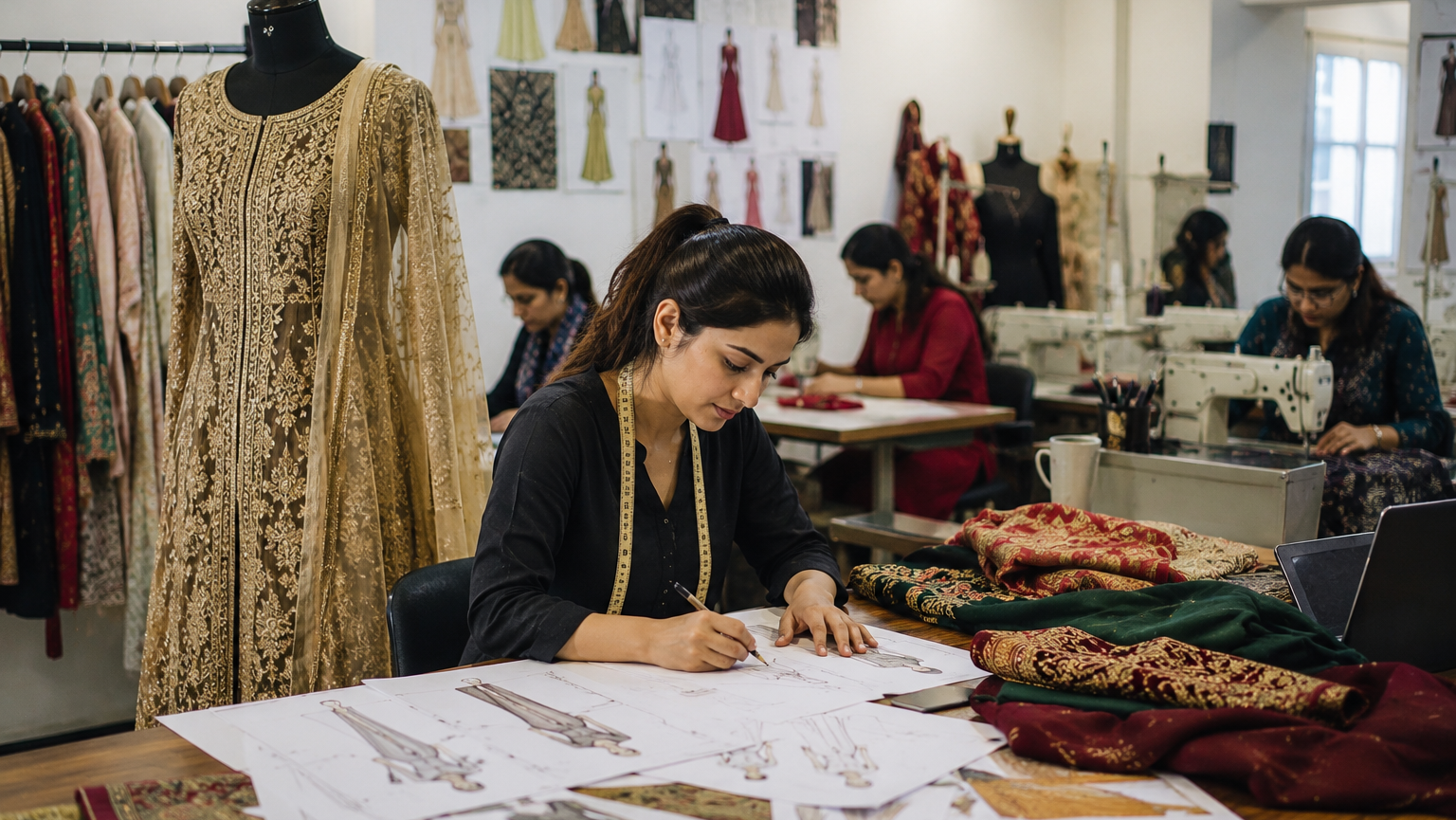
The fashion industry in Pakistan is much bigger than designers, seasonal collections and celebrity appearances. It connects textile manufacturers, designers, garment producers, retailers, artisans, digital creators, e-commerce businesses and exporters. At its core, fashion is also a major business and entrepreneurial opportunity for Pakistan. And Pakistan already has one of the strongest foundations required to build a globally competitive fashion economy: a large textile manufacturing ecosystem.
Pakistan’s textile exports reached approximately $17.89 billion in FY2024-25, according to data from the Pakistan Bureau of Statistics reported by the Associated Press of Pakistan. The opportunity, therefore, is not simply to produce more clothing. It is to build stronger Pakistani fashion brands that can compete globally.
From Textile Manufacturing to Fashion Branding
Pakistan has historically been strong in textile production. The country produces cotton, yarn, fabric, knitwear, garments and home textiles at significant scale. Recent export figures also show the importance of value-added products, with ready-made garments and knitwear among major contributors.
But manufacturing a product and building a fashion brand are two different things. A factory can produce thousands of garments. A successful fashion brand creates an identity that consumers remember. This distinction matters because the highest-value opportunity may not always be in selling fabric or finished products to international companies. It can also be in developing Pakistani brands that own their identity, customer relationships and distribution channels.
Pakistani Designers Have Cultural Capital
One of Pakistan’s biggest advantages is its cultural identity. Pakistani fashion combines traditional craftsmanship with contemporary design. Embroidery, textiles, silhouettes, regional aesthetics and cultural influences give local designers a distinctive foundation.
That identity can become a competitive advantage. The global fashion market is crowded with brands trying to differentiate themselves. Pakistan does not necessarily need to copy international fashion markets to compete. It can develop a recognizable identity of its own. The challenge is turning that cultural identity into consistent international branding.
The Export Opportunity Is Bigger Than Clothing
Pakistan’s textile export performance demonstrates the scale of the underlying industry. During FY2024-25, textile exports increased 7.39% to around $17.89 billion. Knitwear exports rose 13.68% to about $5.01 billion, while bedwear exports increased 11.07% to approximately $3.11 billion. These numbers are important because they show that Pakistan already has international demand for textile products.
The next question should be:
How much more value can Pakistan capture by moving further toward branded, finished and differentiated fashion products? That requires investment in design, branding, quality control, packaging, digital marketing and international distribution.
E-Commerce Could Change the Equation
The traditional fashion business depended heavily on physical stores. That model is changing. A Pakistani fashion company can now potentially reach customers in the Middle East, Europe, North America and other markets through its own website and international e-commerce channels.
Social media has also reduced the distance between brands and customers. Instagram, TikTok, YouTube and other platforms allow emerging fashion businesses to showcase products directly to potential consumers. This is particularly important for smaller brands. A new designer does not necessarily need dozens of physical stores to establish an audience.
A strong product, professional visual identity, reliable fulfillment and consistent digital marketing can create an international customer base from Pakistan.
Social Media Is Becoming Part of the Fashion Business
Fashion and digital media are increasingly connected. A collection is no longer simply photographed for a catalogue. Brands can build entire campaigns around short-form video, influencers, creators, behind-the-scenes content and storytelling. This creates opportunities for Pakistani designers and fashion entrepreneurs to build communities rather than simply sell products.
The most successful brands of the future may not only ask:
“What should we sell?”
They will also ask:
“What story are we telling?”
That distinction can determine whether a fashion company becomes another retailer or develops into a recognizable brand.
The Industry Still Faces Major Challenges
The potential is significant, but so are the challenges. Pakistan’s fashion businesses have to operate within a difficult economic environment involving production costs, energy prices, currency fluctuations, logistics, taxation and access to finance. International competition is also intense.
Countries across Asia have developed large apparel and textile export industries, while global consumers have increasingly high expectations regarding quality, delivery speed, sustainability and digital customer experience. Pakistan cannot compete internationally on low prices alone. That is not a sustainable long-term strategy.
Quality Must Become a Competitive Advantage
If Pakistan wants to strengthen its position in global fashion, quality has to be central. That means consistent sizing, better finishing, reliable materials, professional packaging and dependable delivery. International customers do not judge a brand only by the design of its clothes. They judge the entire experience.
From discovering a product online to receiving the package, every stage contributes to the perception of the brand. Pakistani businesses therefore need to think beyond manufacturing. They need to think like global consumer brands.
Sustainability Will Become Increasingly Important
Sustainability is another area that Pakistani fashion businesses cannot ignore. The global fashion industry is facing increasing pressure to address waste, resource consumption, supply-chain transparency and responsible production.
Pakistan’s large textile ecosystem gives the country an opportunity to improve efficiency and develop more responsible production practices. For emerging brands, sustainability can also become part of their identity. Instead of treating it only as a regulatory requirement, businesses can use responsible production, durable products and transparent sourcing as elements of brand value.
The Rise of Fashion Entrepreneurs
Perhaps one of the most interesting developments is the changing identity of the Pakistani fashion entrepreneur. Today’s fashion entrepreneur does not necessarily have to be a traditional designer.
They can be:
- A digital-first clothing founder
- A textile innovator
- An e-commerce entrepreneur
- A sustainable-fashion startup
- A fashion content creator
- A manufacturer building a consumer brand
- A designer targeting international customers
This wider definition creates opportunities for a new generation of businesses.
Pakistan Needs More Global Fashion Brands
This is where the industry’s biggest opportunity may lie. Pakistan already has textile manufacturing capacity. It has talented designers. It has skilled artisans. It has a large domestic consumer market. It has a growing digital ecosystem. And it has an enormous overseas Pakistani community that can potentially become an important customer base.
What is needed is stronger coordination between these strengths. A Pakistani fashion company should not think of itself merely as a clothing seller. It should ask whether it can become a global Pakistani brand.
Our Editorial View
At Aspire Recorder, we believe the fashion industry in Pakistan should be viewed not only as a cultural sector but also as a serious economic and entrepreneurial opportunity. Pakistan has spent decades building textile production capabilities.
The next phase should be about capturing more value. That means moving from manufacturing to branding, from wholesale to direct-to-consumer, from local visibility to international positioning, and from simply following trends to creating recognizable Pakistani identities.
The opportunity is already there. The challenge is whether Pakistani businesses can build the brands, systems and international strategies required to take it beyond the country’s borders. Pakistan does not need to become another fashion market.
It has the opportunity to become a distinctive fashion brand story of its own.