


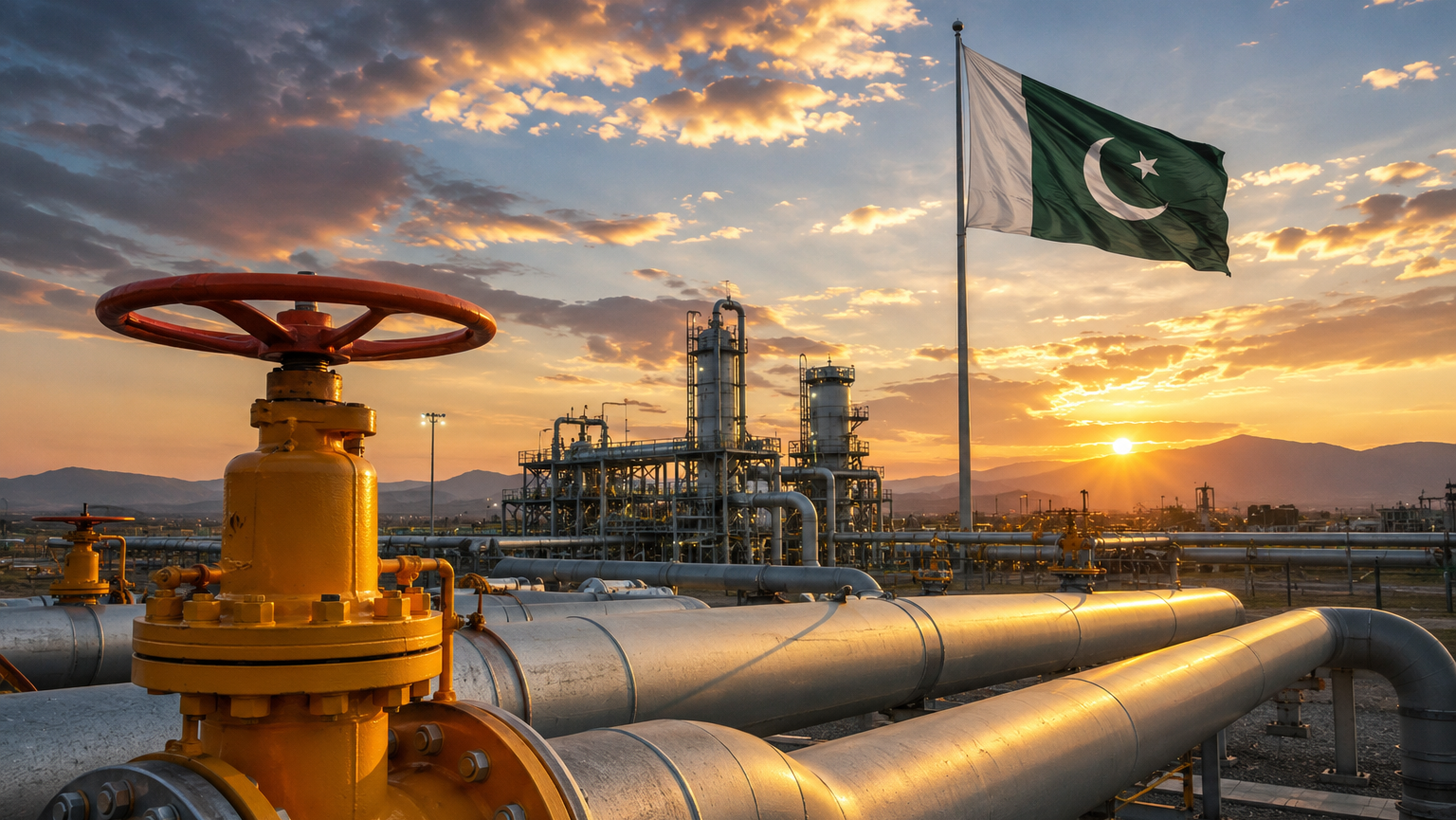
Pakistan gas sector reforms are moving into a new phase as the government considers restructuring the country’s two major gas utilities and dividing them into five separate companies.
The proposed plan would unbundle Sui Northern Gas Pipelines Limited (SNGPL) and Sui Southern Gas Company Limited (SSGC) into one transmission company and four provincial distribution companies. The proposal was discussed during a meeting led by Petroleum Minister Ali Pervaiz Malik and World Bank Country Director for Pakistan Bolormaa Amgaabazar.
The restructuring is part of wider efforts to improve the performance, management and efficiency of Pakistan’s energy sector.
1. Two Major Gas Utilities Could Be Split Into Five
Under the proposed restructuring, Pakistan’s two existing gas utilities would be divided into five smaller entities.
The plan would create one company responsible for gas transmission and four companies focused on provincial distribution.
The government believes a more specialised structure could improve accountability and allow different parts of the gas network to operate with clearer responsibilities.
2. Provincial Distribution Would Become More Important
A major feature of the proposal is the creation of separate provincial distribution companies.
Instead of having large utilities responsible for broad geographical areas, distribution operations could become more closely aligned with individual provinces.
This could make it easier to identify problems in local gas networks and measure the performance of individual companies.
For consumers, however, the success of the reform will ultimately depend on whether it improves service reliability and reduces operational problems.
3. Transmission and Distribution Would Be Separated
The proposed structure would also separate gas transmission from distribution.
This distinction is important because transmission involves moving gas through major pipelines, while distribution focuses on delivering it to households, businesses and other consumers.
A separate transmission company could allow the government and regulators to monitor the national gas network more closely while giving distribution companies greater responsibility for their own operations.
The approach follows a broader restructuring trend already seen in parts of Pakistan’s power sector.
4. World Bank Support Could Shape the Reform
The World Bank is involved in discussions surrounding the proposed gas-sector restructuring.
Its participation could become important as Pakistan attempts to improve the efficiency of state-linked energy companies and strengthen the overall management of its energy infrastructure.
The World Bank has previously highlighted the need for major structural reforms in Pakistan, particularly in sectors affecting long-term economic growth and public finances.
The proposed gas restructuring therefore forms part of a much wider debate about how Pakistan can make public-sector institutions more efficient.
5. Consumers Will Watch the Impact Closely
While restructuring companies may improve management, the most important question for ordinary consumers is what changes they will actually experience.
Households and businesses will be watching whether the reform improves gas availability, reduces service disruptions and creates a more transparent system for handling complaints and connections.
The government will also need to ensure that restructuring does not create additional administrative costs or confusion between the new companies.
Clear regulation and accountability will therefore be essential if the proposed changes are to produce meaningful results.
Why Pakistan Gas Sector Reforms Matter
Pakistan’s energy sector faces several long-term challenges, including financial pressures, infrastructure constraints and the need to improve efficiency.
Gas remains an important part of the country’s energy system, supplying households, industries, power producers and commercial users.
For that reason, changes to the structure of major gas utilities could have consequences across the wider economy.
If the new companies operate more efficiently, the reform could improve management and accountability. However, if responsibilities remain unclear or coordination becomes more complicated, the restructuring could create new challenges.
What Happens Next?
The proposed restructuring still requires further decisions before the new structure can become operational.
The government will need to determine the precise responsibilities of each company, regulatory arrangements and how existing assets, employees and liabilities would be handled.
The transition will also need to be carefully managed to prevent disruption to gas consumers.
For Pakistan, the success of the reform will depend not simply on creating more companies but on whether the new structure delivers better governance, stronger accountability and improved services.
Conclusion
The proposed Pakistan gas sector reforms represent a significant potential change to the country’s energy-sector structure.
The plan to transform two major gas utilities into five companies aims to separate transmission and distribution while giving provincial operations greater responsibility.
However, restructuring alone will not guarantee better performance. Strong regulation, transparent management and effective accountability will be necessary to ensure that the changes benefit consumers and support Pakistan’s broader economic goals.
As the government moves forward with the proposal, businesses, households and investors will be watching closely to see whether the new model can deliver a more efficient and reliable gas sector.
Disclaimer: This article is based on information available at the time of publication. Government policies, restructuring plans and regulatory decisions may change as consultations and approvals continue.